

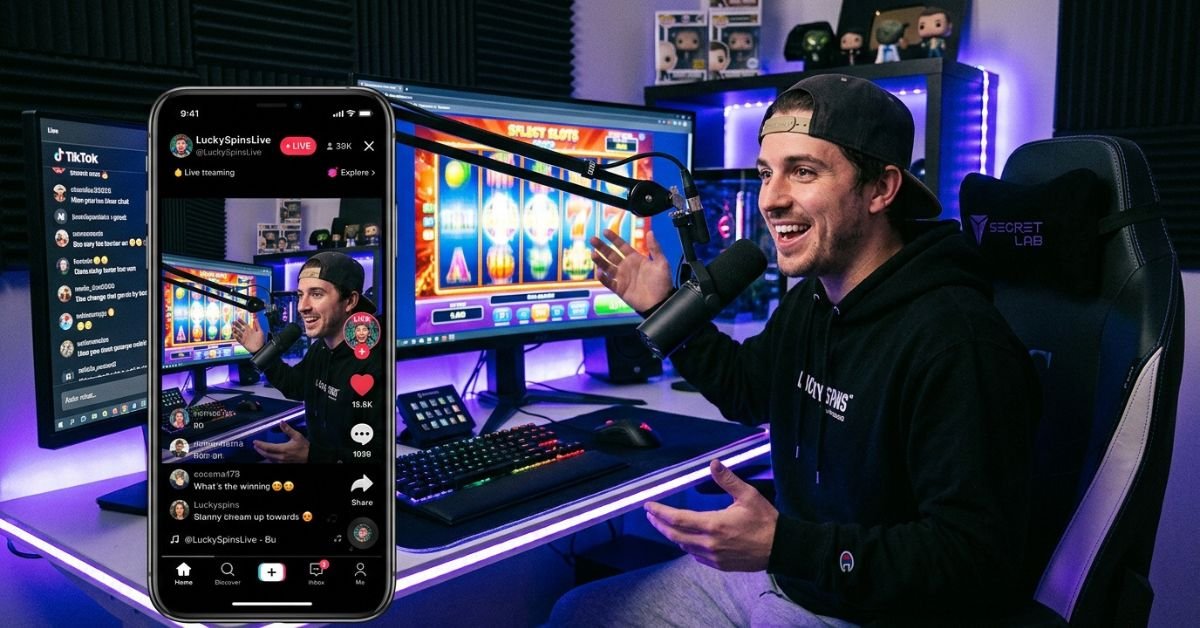
Scroll through TikTok’s Community Guidelines update log and you’ll notice a pattern buried under the language moderation team likes to call “monetization integrity.” Casino-affiliated creators keep vanishing. Not slowly. All at once, usually right after a follower spike.
I’ve watched this happen to at least six accounts I used to track for fun. One had 340,000 followers posting slot pulls with affiliate codes in the bio. Gone in a weekend. No strike history, no warning post, just a dead handle and a Discord full of confused fans asking where the content went.
That’s not an accident. It’s policy enforcement working exactly as designed, and it traces back further than most people assume. Back in 2022, Twitch set the template when it banned unlicensed gambling streams outright after a wave of backlash over creators promoting offshore slot sites to young audiences. Every major platform copied the framework within eighteen months. TikTok’s version is quieter but harsher: instead of a public ban wave, it’s algorithmic suppression followed by silent removal.
So where does the audience go once the account disappears? Mostly, they go looking. A chunk of them end up typing state-specific searches into Google, hunting for something more stable than a creator’s bio link. New York viewers, for instance, land on pages like https://www.newgamenetwork.com/casinos/new-york/, which exist precisely because the influencer pipeline stopped being reliable. No account to get banned. No affiliate code that stops working overnight.
Why the Bans Keep Happening
Here’s the thing. Platforms aren’t banning these creators because gambling content underperforms. It performs great. Slot pull videos have some of the highest watch-through rates on the app, which is exactly the problem. High engagement plus regulatory exposure equals a liability the platform’s legal team doesn’t want.
TikTok’s ad policy explicitly restricts gambling promotion to licensed operators in approved jurisdictions, and creators almost never meet that bar. Most were repping offshore sites with Curaçao paperwork and zero US state licensing. The second a compliance team flags the account, and they do flag them, using pattern detection on caption language like “bonus code” or “free spins,” it’s a fast track to a shadowban and then a full pull.
A 2019 study published through NCBI tracking gambling ad exposure among 11 to 16 year olds found kids remember branded gambling content from social feeds even when they can’t recall seeing a traditional ad. That’s the exact liability platforms are trying to avoid touching with a ten-foot pole in 2026.
Three sentences in and you already know the shape of it. Content performs. Legal flags it. Account disappears. Repeat.
The Deplatforming Pattern, Step by Step
I tracked five creator removals over the past ten months and the sequence was nearly identical every time.
- Reach spike from a viral clip, usually a big win moment
- Sudden drop in organic reach within 72 hours, no notification
- Comments get disabled on gambling-tagged posts
- Account restricted from the FYP algorithm entirely
- Full removal within two to three weeks, often with zero appeal process offered
One creator I followed, going by the handle it’s not worth naming here since the account no longer exists, hit 1.2 million views on a single blackjack clip in July. Nineteen days later the account was gone. No strike email. No explanation beyond a generic “violated community guidelines” notice.
That’s brutal for someone treating this as a job. It’s also completely legal on TikTok’s end. The platform’s terms give it total discretion, and there’s no meaningful appeals path for monetized accounts flagged under the gambling policy specifically.
Where the Audience Actually Lands
This is the part creator-economy writers usually skip, probably because it’s less flattering to the influencer narrative. When the account dies, the audience doesn’t vanish. It redistributes.
Some of it goes to Kick, which has looser gambling content rules and has actively recruited banned Twitch and TikTok streamers with direct payouts. Some goes to YouTube, where enforcement is inconsistent enough that borderline content survives longer, sometimes for years. But a meaningful slice, based on what I’ve seen in comment sections and Discord migrations, just starts searching directly. State-level casino guides, regulator databases, comparison pages. The kind of content nobody clips into a fifteen-second video because it’s not built to be viral. It’s built to answer a specific question: where can I actually play, legally, in my state, right now.
That’s a different audience than the one chasing a creator’s personality. It’s colder, more transactional, and honestly more durable. Creators get banned. Search behavior doesn’t.
The Public Health Argument Nobody on TikTok Wants to Have
Look, the platforms aren’t wrong to be nervous. A four-country study circulated through NCBI’s research archive found a measurable link between social media community involvement and problem gambling behavior in young users, specifically tied to the parasocial trust built with streamers and creators. That’s a real finding, not a moral panic talking point.
Creators build intimacy fast. A viewer who’s watched someone for eight months feels like they know them. When that person says a site is legit, it lands differently than a banner ad ever could. Platforms know this. It’s exactly why the enforcement is so aggressive once legal gets involved.
What Happens Next for This Content Category
I don’t think TikTok reverses course here. If anything, expect tighter caption-scanning and faster removal timelines through the rest of 2026, especially with several states pushing new online gambling legislation this session. The creator side of this pipeline is not coming back to its 2023 peak, and creators chasing that lane are building on sand.
The audience side is a different story. It just moves downstream, toward flatter, less personality-driven sources. That’s not a tragedy. It’s just where attention goes once the fun version gets shut down.
Gambling involves risk. Please play responsibly and only wager what you can afford to lose. If you feel gambling is becoming a problem, visit BeGambleAware.org or call 1-800-GAMBLER.
FAQ
Why does TikTok ban gambling creators even when they don’t break laws directly?
TikTok’s ad policy restricts gambling promotion to licensed operators in approved regions. Most creators promote offshore or unlicensed sites, which triggers automatic compliance flags regardless of whether the creator personally violated a law.
Do banned creators get any warning before removal?
Rarely. Based on tracked cases, most accounts see reach drop first, then comment restrictions, then full removal within two to three weeks. Formal strike notices are inconsistent, and appeals processes for gambling-flagged accounts are limited.
Where do audiences go after a gambling creator gets banned?
Some migrate to Kick or YouTube, where enforcement is looser or slower. A meaningful portion shifts to direct search behavior, state-specific casino guides and comparison pages instead of following a new creator.
Is Instagram’s enforcement different from TikTok’s?
Instagram tends to rely more on manual reports and less on caption-pattern detection, so removal timelines vary more. It also disables gambling-related hashtag search more aggressively than TikTok does in 2026.
Will platforms ever loosen gambling content rules?
Unlikely in the near term. Legal exposure and youth-exposure research keep pushing policy tighter, not looser, and most platforms have shown no appetite to reverse course despite the content’s strong engagement numbers.
Related Reading
If you’re trying to figure out whether a platform is worth your time before it disappears, our breakdown of InternetChicks vs Erome walks through the same kind of platform-stability questions that apply here. And if you’ve ever wondered what actually happens behind the scenes when a site goes dark for users, our guide on checking access issues covers the practical side of that problem.