

Scrub goes in, a carpet comes out
After a pass with a forestry brush mulcher, a patch of lantana, blackberry or woody regrowth is gone, and in its place is a layer of shredded wood spread across the ground. Across much of rural Australia, clearing this kind of growth is part of managing fire risk and reclaiming paddocks, and that leftover layer has as much effect on the site as the clearing itself.
Why fixed teeth instead of swinging blades?
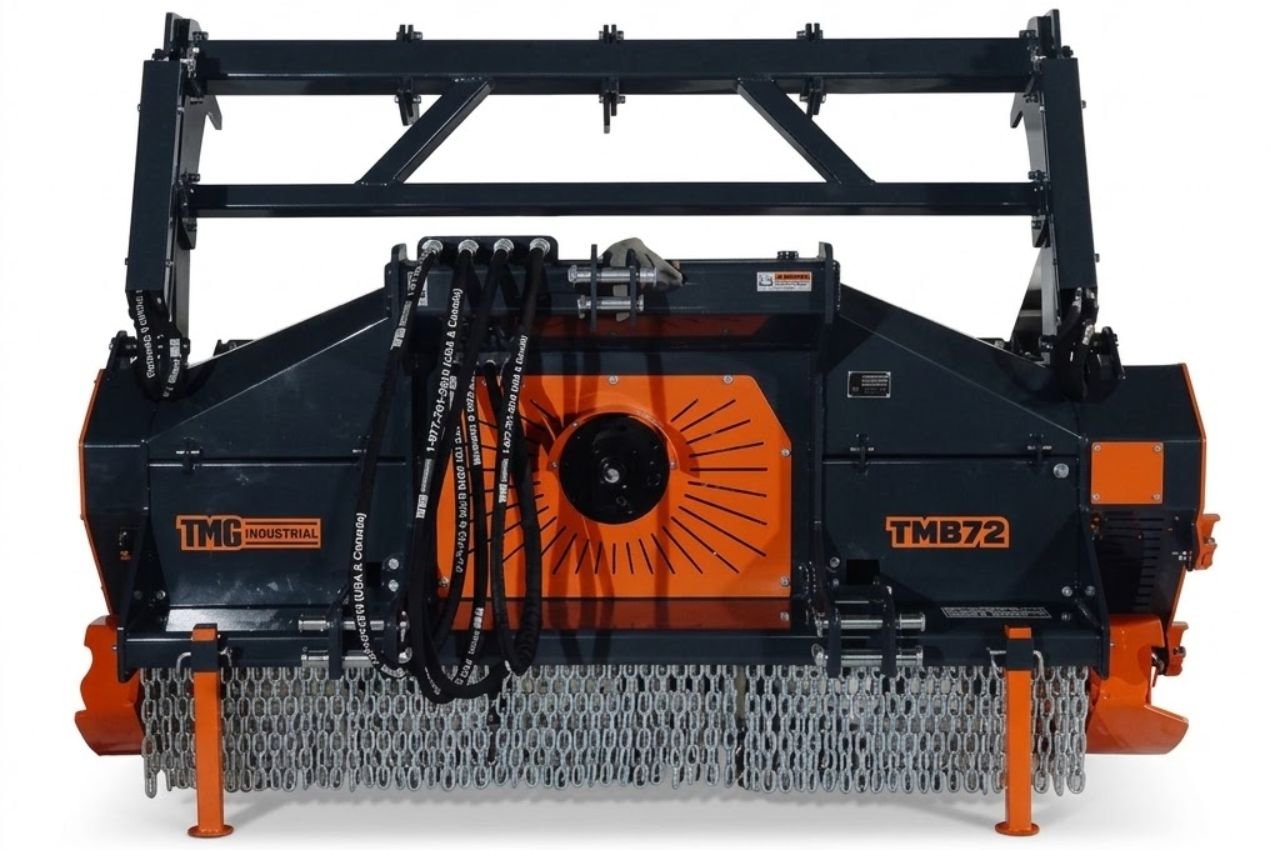
A flail mower uses blades that swing freely on the rotor and fold back when they meet something solid. That protects the machine but limits how much wood it can take on. A forestry mulcher instead uses hammers fixed rigidly to a heavy rotor, each tipped with hard carbide teeth. They cannot fold away, so they chip into stems and small trunks, grinding them down rather than bouncing off.
The trade-off is that everything the rotor meets takes the full impact, including rocks and buried wire. Walking the site first and removing hidden steel saves teeth and reduces the chance of debris being thrown.
What the tractor has to carry
A forestry mulcher for tractor use is heavy. At roughly one and a half tonnes, a unit of this size hangs well behind the rear axle and lifts weight off the front wheels, which affects steering and stability on slopes. Front ballast and a three-point linkage rated for the load are part of the setup, not optional extras.
A PTO mulcher of this kind also needs a tractor that can deliver steady power at 1000 RPM PTO speed. Running it on an undersized tractor stalls the rotor in thick material and puts heavy strain on the driveline.
Choosing how deep to work
Skids on each side set how close the rotor runs to the ground. Working slightly below the surface grinds stumps and roots flush, leaving a smoother finish for mowing later. Running above the surface protects topsoil and the rotor on stony ground. On sloping country prone to erosion, leaving the root mass in place can also help hold soil together until grass cover returns, so the deepest setting is not always the right one.
Where the chips and stones land
A forestry mulcher throws chips and fragments with real force, and a stone or piece of wire caught by the teeth can travel a long way. Keeping bystanders, vehicles and livestock well outside the work area, and keeping the machine’s guards in good repair, reduces that risk. Operators working in heavy scrub also benefit from a tractor fitted with a protective cab or guarding, since branches can spring back toward the seat.
The mulch layer cuts both ways
A layer of wood chips shades the soil, holds moisture and slows the return of weeds. It also remains fuel. Spread thinly it breaks down over time, but deep, dry piles can carry fire, so asset protection zones around buildings usually benefit from lighter coverage or follow-up mowing. Revisiting cleared ground with a lighter pass once regrowth appears is usually easier than letting it thicken again.
Ask before clearing
Rules on clearing native vegetation differ between states and local councils, and some species and areas need approval before any clearing. Checking first avoids fines and delays. With that settled, the TMG Industrial 1780 mm model, built for 70 to 110 HP tractors, makes a practical tractor mulcher for weeds and regrowth up to about 200 mm thick.