

Spring is too late to start
Most people think about raised garden beds in April, when garden centers fill up and bagged soil sells out. By then, a bed built and filled the same weekend has had no time to settle, and it often sinks below the rim within weeks. Setting beds up in the fall avoids that, and in much of Canada the season supplies a key ingredient for free: leaves.
Decide the shape before the first bag goes in
A bed 18 inches tall holds a large volume of material, and once it is full it cannot be moved or reshaped. Modular raised garden beds can be assembled in several layouts, so it pays to try them on the ground first. Full sun for most of the day, a hose within reach and paths wide enough for a wheelbarrow matter more than a neat pattern.
How to fill raised garden beds in layers
Filling a tall bed entirely with purchased soil is costly and often unnecessary, since most vegetable roots work in the upper part of the bed. Coarse, slow-rotting material can take up space at the bottom, with finer material toward the top:
- Cardboard over grass to smother it
- Small branches and woody prunings
- Shredded fall leaves and spent plants
- Compost mixed with garden soil on top
The top layer is where roots do most of their work, so that is where good soil and compost count. Leaves are best shredded with a mower first, since whole leaves mat into a layer that sheds water. Diseased plants and weeds that have gone to seed belong in the garbage rather than the bed.
Let winter do the settling
Leaves and plant material shrink a great deal as they break down, and soil packs down as snow melts and refreezes through the winter. A bed filled in October will usually sit noticeably lower by spring. Topping it up with compost before planting is far easier than watching a bed filled in spring sink under young plants.
Freeze and thaw cycles also help break up clods, and soil organisms keep working in the lower layers whenever temperatures allow. By planting time the layers have begun to blend, and the bed behaves more like established garden soil than a fresh pile of mixed materials.
Plant garlic before the ground freezes
Garlic is one crop that belongs in a fall bed. Across much of the country, cloves are planted a few weeks before the ground freezes so roots can form before winter. Garlic grown in raised garden beds Canada-wide tends to come through the spring thaw well, because a tall bed drains faster than ground-level soil and bulbs are less likely to sit in cold, wet ground and rot. A thick layer of straw or shredded leaves over the planted bed insulates it against hard frost.
A bed ready before the snow
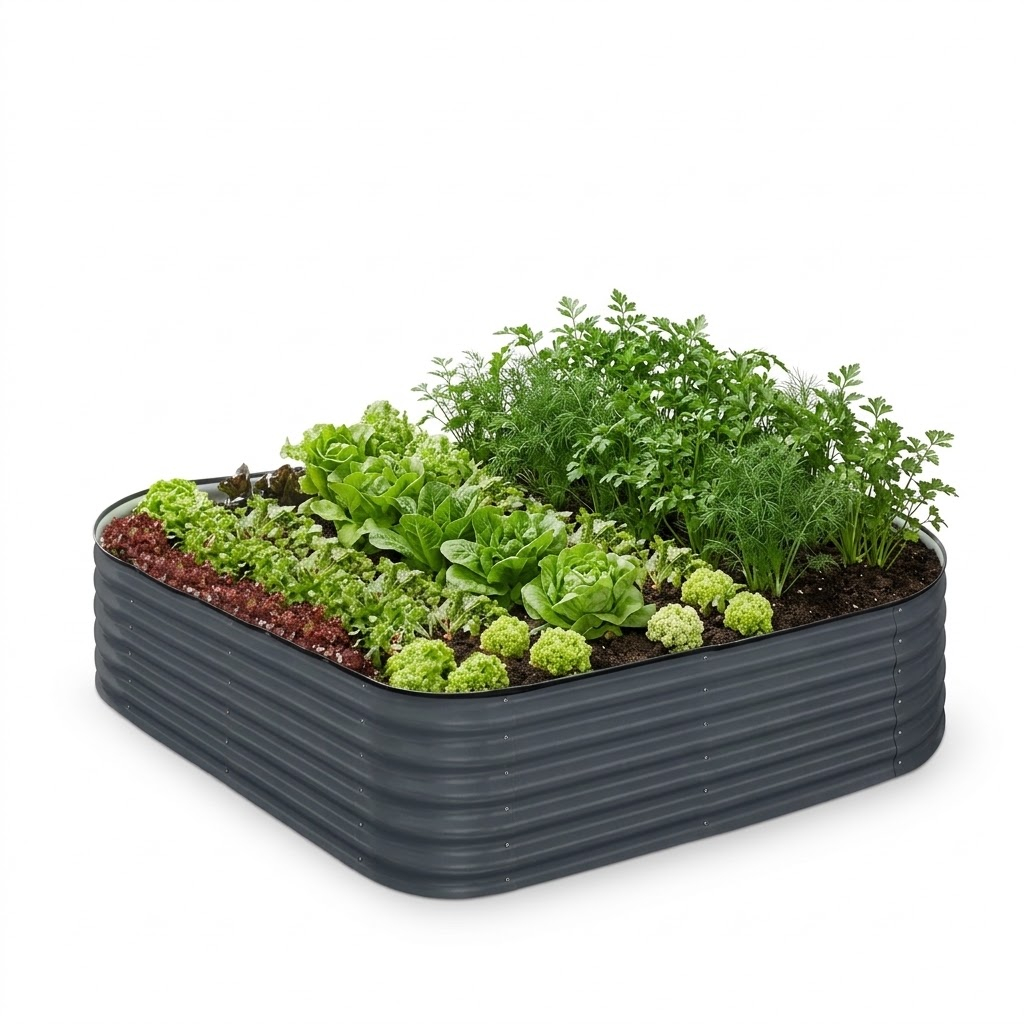
Empty beds can be covered with leaves or straw too, keeping soil from washing out and weeds from taking hold. Steel beds also stay put through winter, with no wood to swell and shrink as snow melts against the sides. TMG Industrial’s 9-in-1 kit is galvanized steel with a powder coat and rubber edging along the top rim, and assembling it now means spring planting starts with a top-up of compost, not a full day of hauling soil.